
For guitarists, backing tracks and jamming sessions are crucial tools for honing their skills, exploring creativity, and enjoying the music-making process. Whether you’re a beginner or an intermediate player, understanding how to effectively use backing tracks can elevate your practice sessions and performances. In this FAQ-driven guide, we’ll cover all the essentials you need to know about backing tracks and jamming. By the end, you’ll know how to choose the right backing tracks, when jamming genuinely improves your playing versus when it becomes background noise, and what a minimal setup actually requires to get started.
What Are Backing Tracks?
Backing tracks are pre-recorded music tracks that provide accompaniment to guitarists. They allow you to play along with a full band sound without needing live musicians. This can be particularly useful for practice, live performances, or just casual jamming. A good backing track does more than fill the silence — it gives you a harmonic and rhythmic context to react to, the same way a real band would.
How Can I Use Backing Tracks in My Practice?
Backing tracks offer several benefits for practice:
- Timing and Tempo: They help you improve your timing and lock in with a consistent tempo, since a static metronome click doesn’t expose the same phrasing mistakes a full arrangement will.
- Technique: Playing with tracks allows you to focus on specific techniques, such as scales, chords, and soloing, in a musical context rather than in isolation.
- Musicality: Backing tracks enable you to practice playing musically rather than just technically, since you have to listen and respond instead of just executing.
- Song Structure: Tracks built around verses, choruses, and bridges teach you to anticipate changes and shape your playing around a song’s arrangement rather than repeating the same idea throughout.
Where Can I Find Quality Backing Tracks?
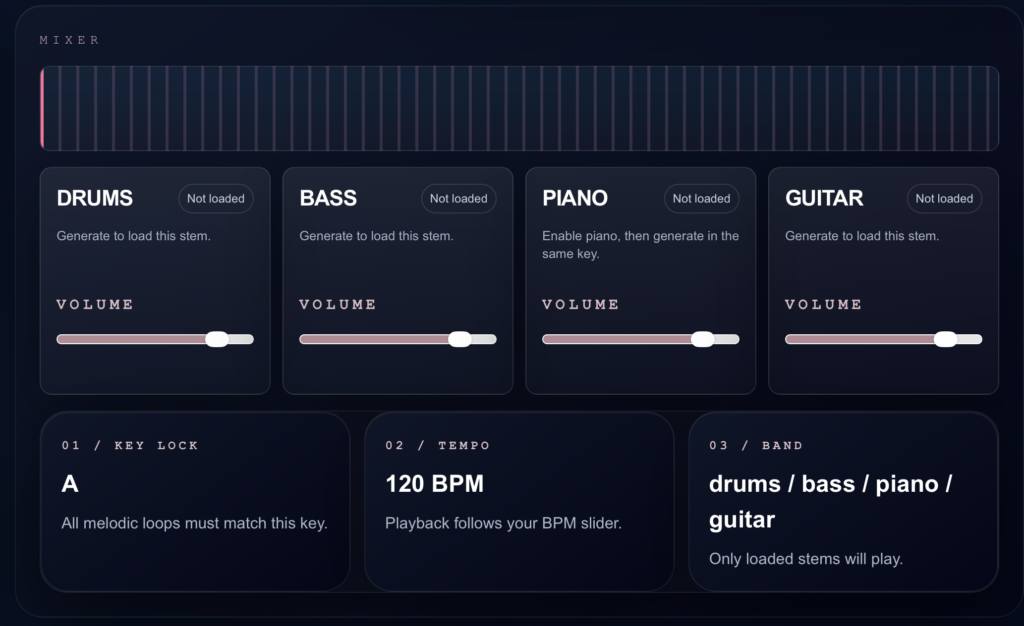
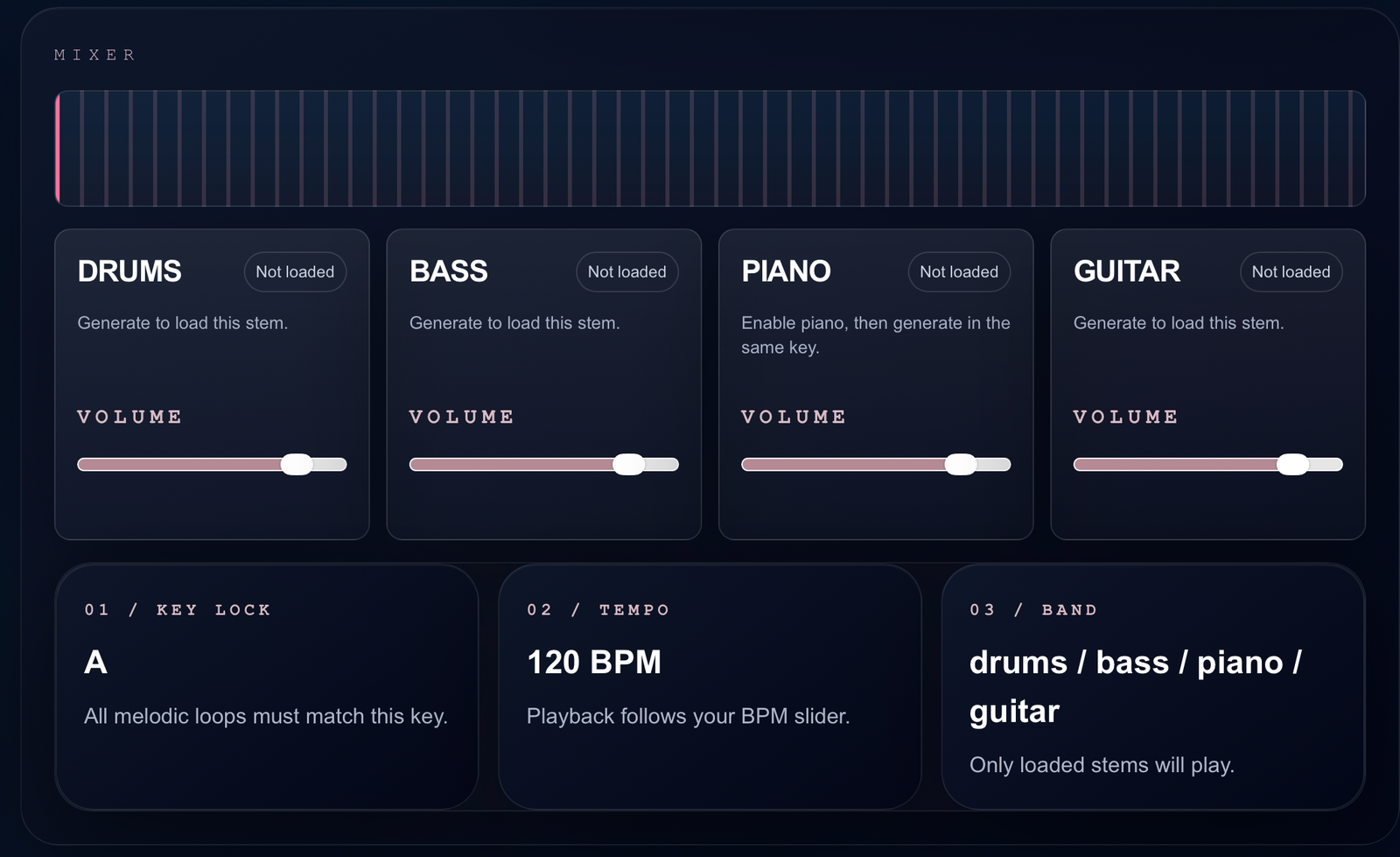
There’s a variety of sources for quality backing tracks. Online platforms like YouTube, Spotify, and specialized websites offer a plethora of options across different genres. For a more personalized experience, you can also use the Harniciuk Sonic Backing Track Generator to create custom tracks that suit your specific needs. Matching the track to your current skill level and key is more important than chasing production quality — a simple track in a comfortable key will teach you more than a polished one that’s too advanced.
Choosing the Right Backing Track for Your Skill Level
Not every backing track suits every player, and picking one that’s mismatched to your level is a common reason practice sessions feel discouraging rather than productive.
- Beginners: look for slow-tempo tracks with a simple, repeating chord progression in a familiar key like A minor or C major, so you can focus entirely on timing without getting lost in the changes.
- Intermediate players: tracks with more chord changes, a bridge or key change, and a slightly faster tempo push you to react quickly while still staying inside a manageable structure.
- Advanced players: look for tracks in styles you don’t normally play, unusual time signatures, or less common keys, since the goal at this stage is expanding your vocabulary rather than reinforcing what’s already comfortable.
Common Mistakes When Jamming with Backing Tracks
A few habits quietly limit how much guitarists get out of backing tracks:
- Ignoring song structure: noodling over the same scale for the whole track instead of reacting to section changes wastes the main benefit of a full arrangement.
- Playing too loud in the mix: if you can’t hear the track clearly over your own playing, you lose the timing and harmonic reference you’re jamming to in the first place.
- Never changing tracks or keys: sticking to one comfortable backing track for months limits your ear and your fretboard vocabulary — rotate genres and keys regularly.
- Skipping the count-in: coming in late or early on the first bar is a common beginner habit that a few seconds of counting along beforehand fixes.
Why Is Jamming Important?
Jamming allows musicians to explore and express creativity freely. It helps guitarists develop improvisational skills, improve ear training, and gain confidence in their playing. Jamming can be a solo activity with backing tracks or a social experience with other musicians. Either way, it forces you to make real-time musical decisions instead of following something you’ve already memorized, which is a different skill from rehearsed practice.
How Can I Start Jamming as a Beginner?
Starting to jam can seem daunting, but here’s a simple approach:
- Choose a Key: Start with a key you are comfortable with, such as C major or G major.
- Simple Chords: Use basic open chords or power chords.
- Experiment: Play around with different chord progressions, scales, and melodies.
- Don’t Aim for Perfect: The first few jam sessions will feel clumsy, and that’s expected — the goal is reacting in real time, not playing cleanly.
What Equipment Do I Need to Jam with Backing Tracks?
To get started with jamming, you’ll need some basic equipment:
- Guitar and Amp: Your primary instrument for jamming.
- Audio Source: A device to play your backing tracks, such as a smartphone, computer, or tablet.
- Speaker or Headphones: To hear the backing track clearly, use speakers or headphones, ideally loud enough to hear over your amp without drowning it out.
- A Tuner: Backing tracks are recorded at a fixed pitch, so a quick tune-up beforehand avoids fighting an out-of-tune guitar against an in-tune track.
How Do I Improve My Jamming Skills?
Improving jamming skills takes time and practice. Here are some tips:
- Listen Actively: Pay attention to the backing track’s structure and harmony.
- Develop Your Ear: Spend time transcribing solos and understanding the theory behind them.
- Practice Regularly: Consistent practice will help you become more comfortable with improvisation.
- Record Yourself: Recording a jam session and listening back afterward reveals timing and phrasing issues that are hard to notice in the moment.
Remember, the key to enjoying backing tracks and jamming is to experiment and have fun. Explore different genres, techniques, and styles, and you’ll find your unique voice as a guitarist.
Backing Tracks vs. Playing with a Real Band
Backing tracks are consistent and endlessly repeatable, which makes them ideal for focused practice, but they don’t adjust to you the way a real band does. A drummer will react to your dynamics, a bassist will lock in with your rhythm changes, and a singer will cue you on when to lay back; a backing track will not. Playing with other musicians adds unpredictability that’s harder to practice for but ultimately more valuable once you’re gigging or recording with a group. The most useful approach is to treat backing tracks as the training ground and real musicians as the test — use tracks to build the skills, then apply them in a room with other people as often as you can.
If you don’t have regular access to other musicians, look for local jam nights, open mic events, or online communities built around backing tracks and collaborative playing — they bridge the gap between solo practice and a full band without requiring you to commit to forming one.
Related reading
Want to build your own tracks instead of just playing along? How to Create Guitar Backing Tracks for Practice walks through the process in detail, covering software options and how to structure a track so it actually feels musical to play over, and A 10-Minute Daily Guitar Practice Routine shows where jamming fits into a daily routine.
Practice smarter with Harniciuk Sonic’s free guitar tools — open Chord Analyzer and level up today.
Related tools and guides
- Build a track in your key and tempo with the Backing Track Generator.
- Practice melodic choices with How to Improvise Over a Guitar Backing Track
Rehearsing a complete song rather than an open-ended jam? Keep verses, cues and the next line visible with Lyrics Follow while the backing track handles the musical structure.