
A simple guitar practice plan gives beginners a clear way to build technique, timing and confidence without trying to improve everything at once.Why guitar practice plan for beginners matters
Beginners progress faster when each session has a small structure and ends with recognisable music. The useful question is not whether a method looks advanced, but whether it helps you hear, play and repeat a musical result. Work slowly enough to notice timing, unwanted noise and tension. Then increase the difficulty only when the movement stays relaxed.
Keep one measurable goal for each session. A clear goal might be four clean repetitions, one complete chorus without stopping, or a recording that stays in time. Small evidence is more useful than practising for a long time without listening.
A step-by-step method
Tune, review two chords, practise one change with a steady pulse and finish with a short riff or song section.
- Set one musical goal and remove unnecessary options.
- Play slowly enough to stay accurate and relaxed.
- Record or listen back before increasing speed.
- Repeat the successful version, then change only one variable.
This sequence keeps the ear involved. It also prevents the common habit of changing tempo, tone, fingering and harmony at the same time. When only one variable changes, you can understand why the next attempt improved.
A focused practice drill
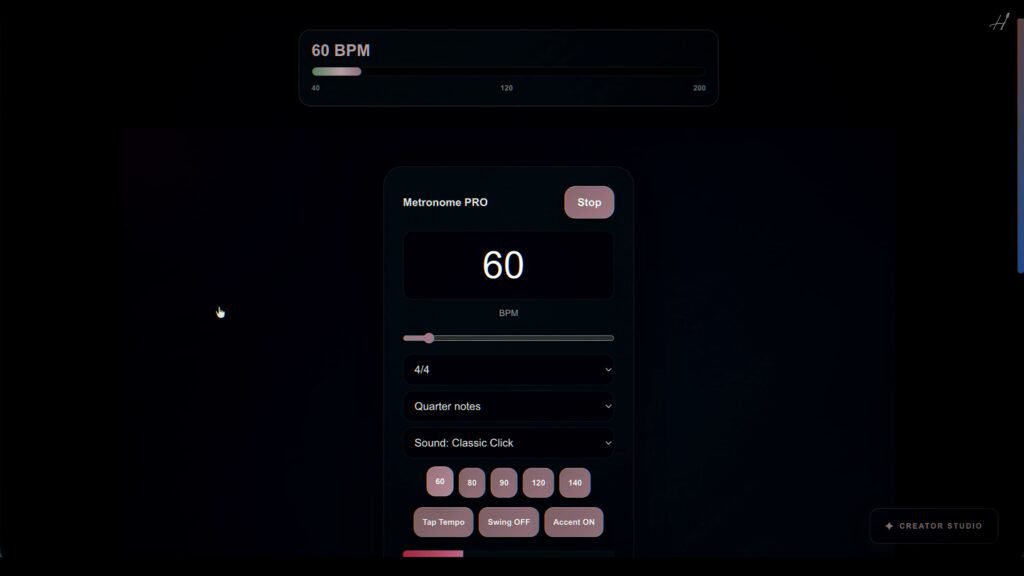
Make twenty slow chord changes without stopping, rest, then play the same changes for one minute with a metronome.
Use three rounds: an orientation round, a clean repetition round and a musical round. During the last round, add dynamics, articulation and phrasing. The goal is to turn a technical action into something you could use in a riff, lesson, rehearsal or recording.
Common mistakes to avoid
Avoid adding many new chords before the first pair sounds clean and do not squeeze the neck harder when a note buzzes.
Another mistake is continuing after concentration drops. Stop, identify the exact problem and restart with a smaller task. Ten attentive minutes usually create a better result than an unfocused hour.
Use the result with Lessons Hub
Choose one beginner lesson and connect it to the tuner and metronome before the next session. Open the tool, complete one useful action and then continue to a lesson, backing track or upload. This keeps practice connected to real music.
Build a connected guitar workflow
Harniciuk Sonic connects practice, learning, creation and publishing. Start with the guitar tools, use a focused exercise, and continue with the Lessons Hub when you need a structured next step. Creators can turn the finished idea into a TAB, lesson or marketplace resource.
Frequently asked questions
How long should I practise this?
Start with ten focused minutes. Continue only while you can hear and correct the result. Consistency across several days matters more than one exhausting session.
When should I increase the difficulty?
Increase tempo, range or complexity after several relaxed and accurate repetitions. If timing or tone collapses, return to the last version you could control.
Do I need special equipment?
No. A guitar, careful listening and the relevant Harniciuk Sonic tool are enough to begin. Headphones or a simple recording can make evaluation easier.