
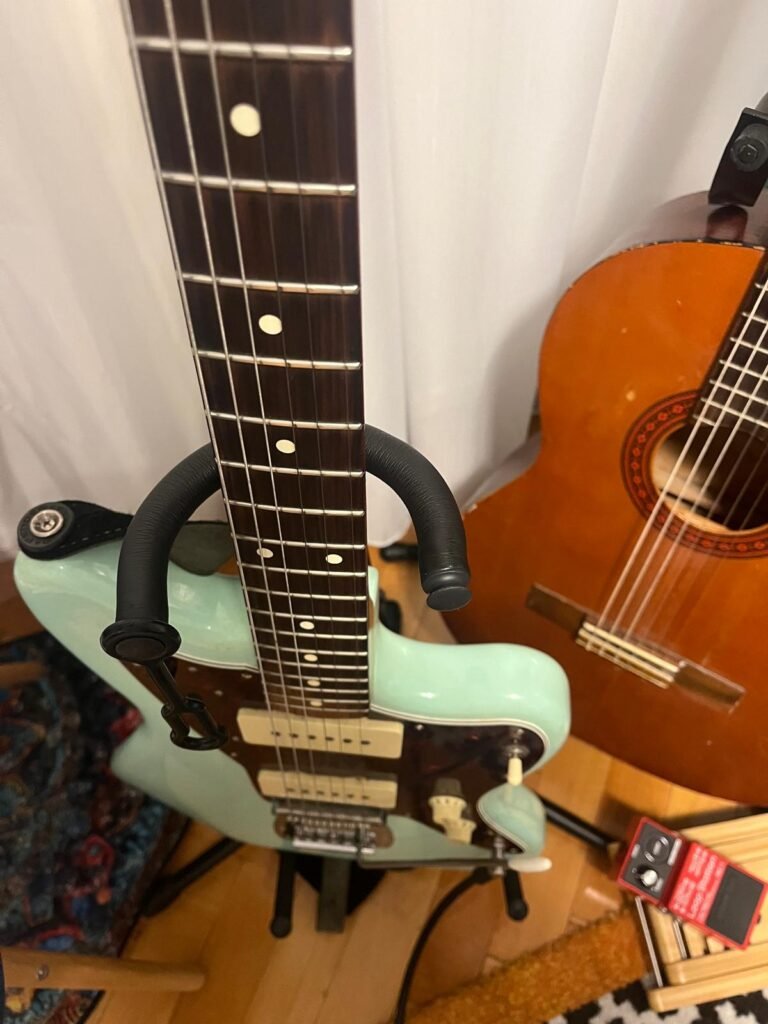
Buying the right guitar gear comes down to asking better questions before you spend money, not just reading star ratings. This guitar gear buying guide walks through how to evaluate guitars, amps, pedals, and accessories on their actual merits, what changes as you move up in budget, and the mistakes that waste the most money. None of this requires becoming a gear expert overnight — a handful of consistent checks, applied every time you shop, will filter out most bad purchases before you ever hand over your money.
The Gear Categories This Guitar Gear Buying Guide Covers
Most guitar gear purchases fall into five categories, and each one has different things worth checking before you buy. Treat this section of the guitar gear buying guide as a checklist you can return to before any purchase.
- Guitars: neck profile and scale length (how the instrument feels under your hand), tonewood and construction (how it resonates), pickup type (single-coil vs. humbucker tone), and fret condition.
- Amplifiers: wattage and headroom (how loud it gets before breaking up), tube vs. solid-state circuitry (tube amps typically cost more and need occasional tube replacement; solid-state is more consistent and low-maintenance), and available tone-shaping controls.
- Pedals and effects: true bypass vs. buffered (whether the pedal colors your tone when switched off), power requirements (some pedals draw more current than a standard 9V daisy chain supplies), and whether the effect is analog or digital.
- Cables and accessories: cable length and shielding quality (longer, poorly shielded cables can add noise), strap locks, and case or gig bag protection.
- Strings and picks: gauge (thickness affects tone and playability), material (nickel-wound, stainless steel, coated), and pick thickness for your playing style.
Whichever category you’re shopping for, the checks above take only a few minutes and can save you from discovering a dealbreaker after the return window has already closed.
How to Read a Gear Review Without Getting Misled
A useful review separates measurable facts from personal preference. Specs such as weight, wattage, pickup output, and scale length don’t change based on who’s writing. Tone descriptions like “warm,” “bright,” or “aggressive” are subjective and depend on the reviewer’s amp, ears, and playing style, so treat them as one data point rather than a verdict. A reviewer who loves a bright, aggressive tone may score a genuinely warm-sounding amp lower simply because it doesn’t match their preference, not because the amp is poorly built.
Cross-check claims against at least two independent sources before trusting them, and be skeptical of reviews that list only positives. Every piece of gear involves trade-offs, so a review with no downsides at all is usually incomplete.
Key Differences by Budget Tier
Guitar gear roughly splits into three price tiers, and understanding what actually changes between them is more useful than chasing a brand name:
- Entry-level: functional but with more variance in build quality. Checking the specific unit in person, when possible, matters more than the spec sheet at this tier. Entry-level gear is also where secondhand deals tend to offer the best value, since normal wear rarely affects how the instrument actually plays.
- Mid-range: more consistent manufacturing, better hardware such as tuners, bridges, and potentiometers, and pickups that are usually the biggest tone upgrade over entry-level gear.
- Professional-level: premium materials and hand-finishing work, though the practical playing difference versus mid-range gear is often smaller than the price gap suggests. This tier is as much about durability and resale value as it is about sound.
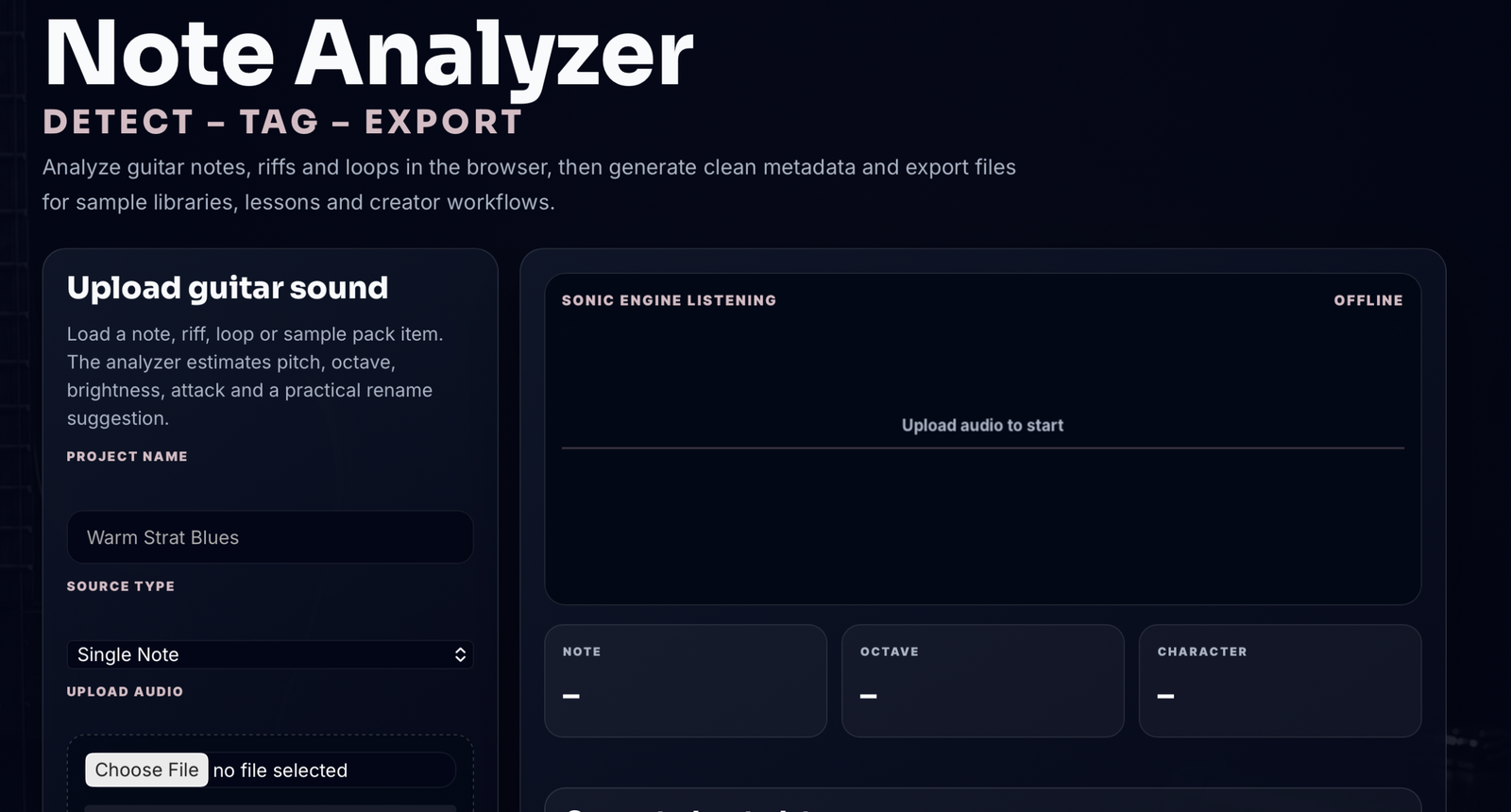
Spending more doesn’t fix a technique problem or replace practice time. If you’re unsure whether new gear will actually help, it can be more useful to spend a few weeks working with tools like Harniciuk Sonic’s Chord Analyzer or Scale Generator first, to isolate whether the limitation is really the instrument.
Buying New vs. Used Gear
Used gear can stretch a budget significantly further, but it shifts more responsibility onto you to check condition before paying. A few checks are worth doing every time:
- Neck and frets: sight down the neck for warping, check for excessive fret wear or buzzing, and confirm the truss rod still has adjustment room left in both directions.
- Electronics: plug in and wiggle cables, jacks, and pots while listening for crackling or dead spots, which often signal a loose connection rather than a failed component.
- Hardware wear: check tuning stability after several bends, and look for corrosion on frets or hardware that suggests the instrument sat in a humid environment.
Buying new trades that inspection effort for a warranty and predictable condition, which matters more for gear you depend on for gigs or recording sessions where a sudden failure isn’t an option. Buying used rewards patience and a willingness to walk away from a listing that raises questions.
Try Before You Commit
Whenever possible, play the actual gear before buying, or confirm the seller’s return window in writing. Many issues, like a neck that doesn’t suit your hand or an amp’s tone at low volume, only show up once you’ve spent real time with the instrument rather than a few minutes in a shop. If a seller won’t allow a trial period or in-person test, treat that as useful information about how confident they are in the product.
Common Mistakes and How to Avoid Them
- Skipping research: avoid buying based solely on price or appearance; check specs and reviews first.
- Ignoring user reviews: owner feedback collected over months of use catches problems a first-week review misses.
- Overlooking compatibility: confirm new gear works with what you already own, such as pedal power requirements, amp impedance, and cable connectors, before buying.
- Chasing trends: gear that’s popular online isn’t automatically right for your playing style or genre.
- Buying based on a single review: even a detailed review reflects one person’s ears and one unit off the line; cross-reference at least one other source before committing to an expensive purchase.
- Underestimating setup costs: a new guitar or amp sometimes needs a professional setup or minor adjustment to play its best, and skipping that step can make good gear feel disappointing.
Frequently Asked Questions
What should I consider when reading a gear review? Look for a mix of measurable specs and honest trade-offs, and check whether the reviewer actually used the gear over time rather than for a single session.
How can I avoid overpaying? Compare prices across multiple retailers, check for open-box or demo-unit discounts, and confirm the return policy before buying.
Are more expensive brands always better? Not necessarily. Evaluate each product on its own specs and how it fits your playing style rather than assuming price equals quality, and remember that a premium price tag sometimes pays for materials and finish rather than a meaningful difference in how the gear actually sounds. For background on how amplifier circuitry affects tone, see this overview of guitar amplifiers.
Final Takeaway
Good gear decisions come from separating fact from opinion, understanding what actually changes between budget tiers, and checking compatibility with what you already own before you buy. Once you have the right gear, the tools you use to practice with it, like tuning, chord recognition, and scale practice, matter just as much as the gear itself.
Practice smarter with Harniciuk Sonic’s free guitar tools — open Guitar Tuner and level up today.
Related reading
Before you spend on new gear, make sure your fundamentals are dialed in — How to Tune a Guitar Online and Best Online Guitar Practice Tools and How to Use Them cover the free tools worth trying first.
This guitar gear buying guide comes down to one habit: whether you end up buying new or used, the goal stays the same — match the gear to what you actually play, not to what looks impressive in a photo. A clear checklist beats an emotional purchase every time, and the money you save on the wrong gear is money you can put toward the right gear later.