
As the sun set behind the hills, Jake picked up his guitar, eager to dive into his new practice routine. He had been playing for a couple of years, but recently felt stuck in a rut. That’s when he discovered Harniciuk Sonic, a platform that promised to revamp his practice sessions with structured routines and insightful lessons. Like a lot of self-taught players, Jake had spent two years accumulating a grab-bag of half-learned songs and scale shapes without ever stringing them into a plan, and he could feel the plateau even if he couldn’t name exactly what was causing it.
Understanding the Basics of Practice Routines
Before Jake could see improvement, he knew he needed a solid practice routine. The key was consistency and structured practice rather than haphazard sessions. He started with setting aside a specific time each day, ensuring his practice was a non-negotiable part of his schedule.
For beginner and intermediate guitarists, a typical routine might start with 5 minutes of warm-up exercises. These could include finger stretches and simple scales. Jake used the metronome feature on Harniciuk Sonic to ensure he was keeping time.
Where Jake practiced mattered almost as much as how long he practiced. He picked a quiet corner of his room, away from the TV and his phone, and kept his guitar on a stand so picking it up required zero friction. On low-energy days, he still showed up for the full session, but he lowered the bar to just the warm-up and one focused drill rather than skipping entirely — consistency, he learned, beats intensity when you’re trying to build a habit that survives busy weeks.
Setting Goals for Each Practice Session
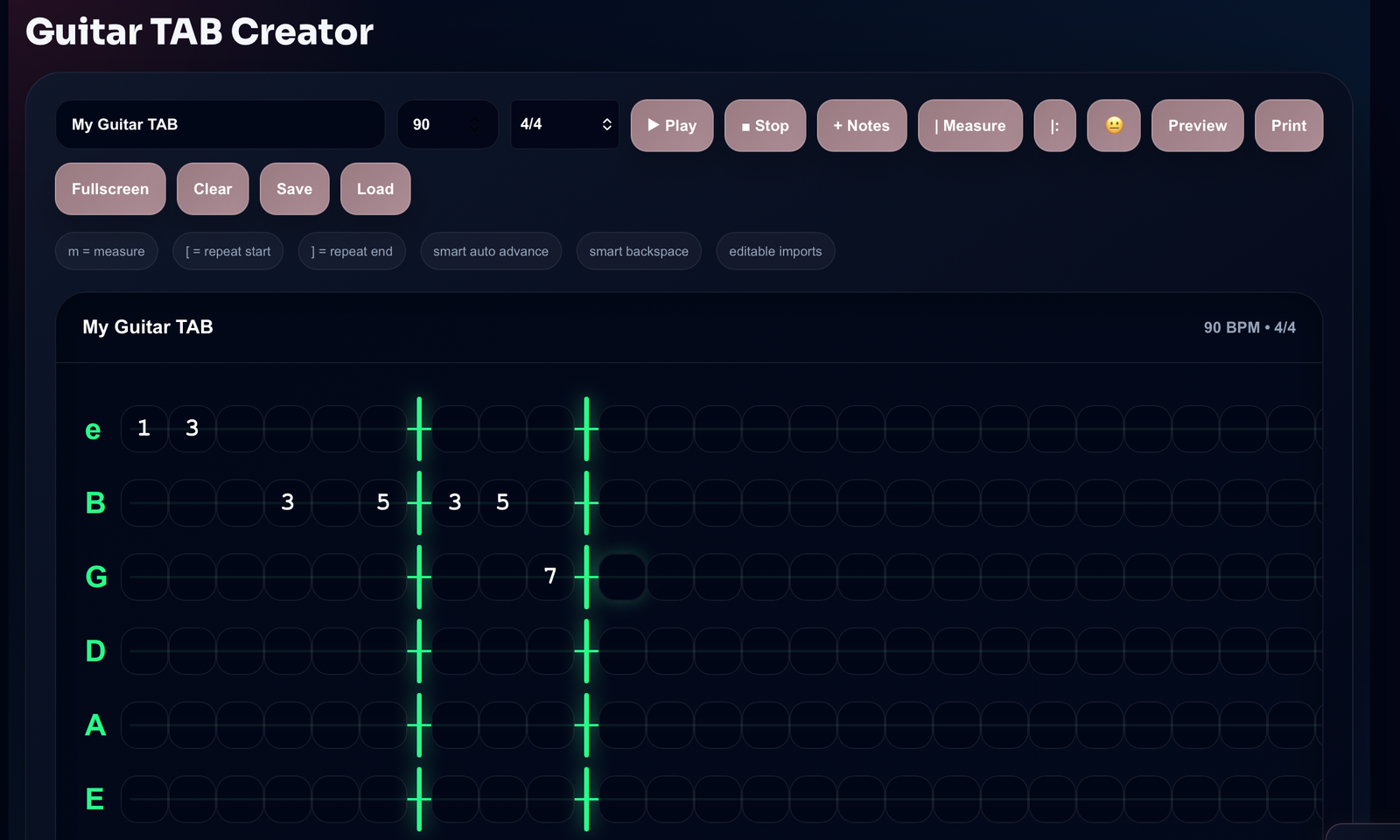
Each practice session should have clear goals. Jake set weekly objectives, such as mastering a new chord or improving his speed. This approach helped maintain focus and track progress. The Harniciuk Sonic platform offered a personalized dashboard where Jake could log his goals and achievements, making it easier to stay motivated.
Breaking Down Goals
Jake found it beneficial to break down larger goals into smaller, actionable steps. For instance, if his goal was to learn a new song, he would first focus on the chord progressions, then the strumming pattern, and finally, the full song performance.
To keep the goals honest, Jake borrowed the SMART framework — specific, measurable, achievable, relevant, and time-bound. “Get better at soloing” became “play the A minor pentatonic scale cleanly at 120 BPM across all five positions by Sunday.” The specificity meant he always knew, at the end of a session, whether he’d actually hit the target or was still short, instead of guessing.
Choosing the Right Tools for the Job
Part of what made the new routine stick was cutting down on friction. Instead of switching between a separate metronome app, a tuner, and a notebook for tracking goals, Jake consolidated most of that into Harniciuk Sonic itself: the built-in tuner for a quick check before every session, the metronome for tempo work, and the dashboard for logging weekly targets. It wasn’t that any single tool was irreplaceable, but having fewer things to open and fewer tabs to juggle meant he actually started sessions instead of procrastinating by “setting up.”
Building a Weekly Practice Schedule
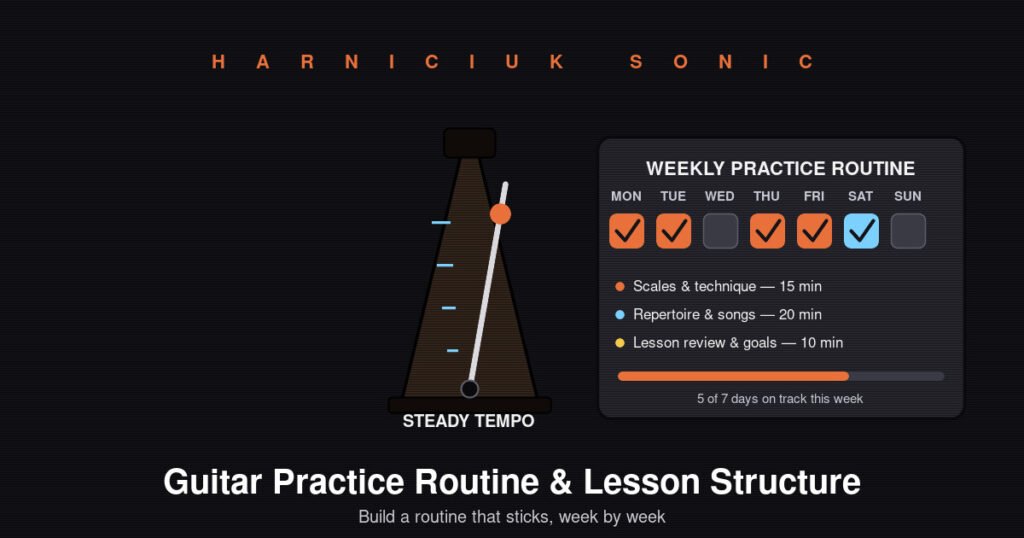
Jake eventually mapped his goals onto a simple weekly structure instead of deciding what to work on from scratch every day. Monday and Thursday were technique days — scales, alternate picking, and finger independence drills. Tuesday and Friday were repertoire days, spent entirely on the two or three songs he was actively learning. Wednesday was reserved for ear training and improvisation over backing tracks, and the weekend was flexible: whichever area had fallen behind got the extra attention. Writing the plan down where he could see it removed the daily decision fatigue of figuring out what to practice, which turned out to be one of the biggest reasons his sessions used to fizzle out after ten minutes.
Incorporating Lessons and Feedback
One of the standout features of Harniciuk Sonic was the Lessons Hub. Jake could access a wealth of lessons tailored to his skill level, covering everything from basic chords to advanced techniques. The interactive lessons provided instant feedback, allowing Jake to correct mistakes as he played.
Feedback is crucial in practice. Jake recorded his sessions and compared them with the lesson videos, which allowed him to spot errors and make necessary adjustments.
Utilizing Backing Tracks and Tools
To make practice more engaging, Jake utilized backing tracks available on the platform. These tracks helped him work on timing and improvisation, crucial skills for any guitarist. Additionally, tools like chord finders and scale generators were invaluable in expanding Jake’s musical vocabulary.
Experimenting with Different Styles
Jake experimented with various genres using the backing tracks, from blues to rock, which not only kept his practice sessions interesting but also broadened his playing style. When he wanted a longer jam instead of a short drill, he’d pull up a full-length backing track and just play through changes for ten or fifteen minutes — a good primer on this approach is the backing tracks and jamming guide, which covers how to pick tracks that actually match your current skill level instead of ones that are too fast or too harmonically dense to learn anything from.
Common Pitfalls to Avoid
A few habits quietly undid Jake’s early progress before he caught them. The first was noodling — picking up the guitar and playing whatever felt good instead of the planned drill, which is enjoyable but doesn’t move the needle on a specific weakness. The second was practicing mistakes at full speed instead of slowing down; a passage played wrong ten times at speed just cements the wrong version in muscle memory. The fix was almost always the same: drop the metronome down until the passage was clean, and only increase tempo in small increments once it felt automatic. The third pitfall was skipping warm-ups on days he felt rushed, which led to sloppier technique across the whole session and, occasionally, sore hands the next day.
Evaluating Progress and Adjusting Routines
Every few weeks, Jake evaluated his progress. If he felt stagnant, he adjusted his routine by adding new challenges or increasing practice time on specific areas. The Harniciuk Sonic workflow was flexible, allowing him to customize his practice to fit his evolving needs.
By consistently reviewing his progress, Jake ensured that his practice remained effective and aligned with his musical goals.
The metrics he tracked were deliberately simple: metronome speed on his current technical exercise, the number of songs he could play start-to-finish without stopping, and a rough 1-to-5 self-rating on how confident he felt in his current focus areas. None of these needed to be precise — the point was having something concrete to compare week over week, so “I feel like I’m improving” turned into “I went from 90 to 108 BPM on this lick in three weeks,” which was both more motivating and more useful for deciding what to work on next.
Through structured routines and the resources at Harniciuk Sonic, Jake transformed his practice sessions from monotonous drills into a dynamic and rewarding journey. None of it required more raw talent than he’d had before — just a clearer structure, honest goals, and a weekly rhythm he could actually stick to. Whether you’re a beginner or an intermediate guitarist, adopting a structured practice routine with clear goals and utilizing available tools can significantly enhance your playing experience. If you’re stuck in the rut Jake was in, the fastest first step isn’t overhauling everything at once — it’s picking one piece of this system, a single weekly schedule or one SMART goal, and giving it a real two-week trial before judging whether it works for you.