
Scales and modes are fundamental concepts in music theory that greatly enhance a guitarist’s ability to improvise and understand music. Yet, many guitarists find these topics puzzling. In this FAQ-driven article, we address common questions to help demystify scales and modes.
What Are Scales and Why Are They Important?
Scales are simply a series of notes in a specific order. They are the building blocks for melodies, solos, and harmonies in music. Understanding scales aids in developing finger strength, dexterity, and fretboard familiarity. The most commonly used scale in Western music is the major scale, which serves as the foundation for other scales and modes.
Why Should I Learn Scales?
- Improvisation: Scales provide a framework for improvisation, allowing you to play solos that fit harmonically over chord progressions.
- Understanding Music: They help you understand the music you play and listen to, making it easier to learn new songs.
- Creativity: Knowing scales enhances your ability to create original music and develop your own style.
What Are Modes?
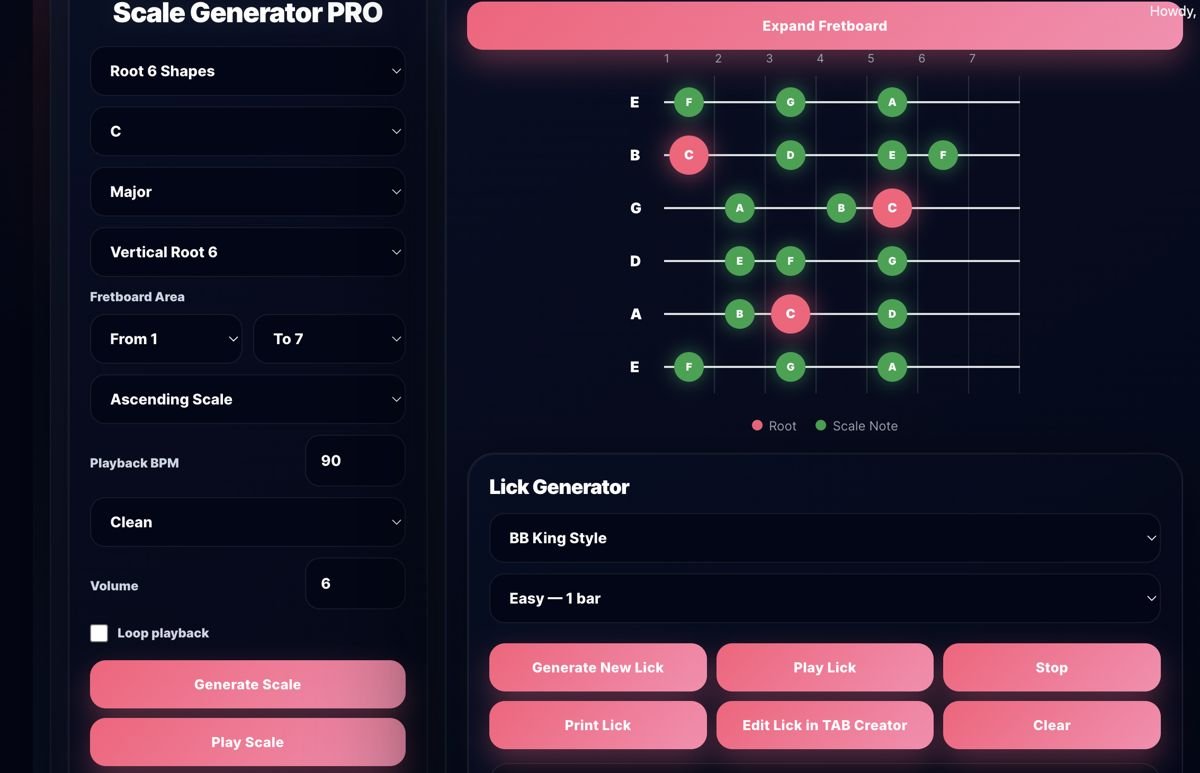
Modes are variations of scales that start from a different note within the scale. They are derived from the major scale and provide different tonalities and emotions. For example, the Dorian mode has a minor feel with a raised sixth, whereas the Mixolydian mode gives a dominant sound.
How Do Modes Differ From Scales?
- Starting Point: Modes are scales starting on different degrees of the original scale.
- Sonic Character: Each mode has a unique sonic character, providing diverse options for musical expression.
- Application: Modes are often used to evoke specific moods or fit particular styles of music.
How Can I Practice Scales and Modes?
Practicing scales and modes requires regular repetition and application. Here’s a practical approach:
- Use a Scale Generator: Utilize tools like the Scale Generator on Harniciuk Sonic to explore different scales and modes.
- Start Slow: Begin practicing scales slowly to ensure accuracy and control.
- Apply in Context: Use backing tracks to practice scales and modes in a musical context, which improves your timing and phrasing.
What Are the Most Important Scales and Modes to Learn?
For beginners and intermediate guitarists, focus on these:
- Major and Minor Scales: The foundation for most Western music.
- Pentatonic Scales: Simplified versions of major and minor scales, great for rock and blues.
- Modes of the Major Scale: Ionian (major), Dorian, Phrygian, Lydian, Mixolydian, Aeolian (natural minor), and Locrian.
How Do I Incorporate Scales and Modes into My Playing?
Incorporate scales and modes by:
- Improvising: Use them in solos and melodic lines.
- Songwriting: Create chord progressions that complement the scales and modes you are practicing.
- Theoretical Understanding: Analyze songs to see which scales and modes are being used.
Conclusion
Mastering scales and modes is crucial for any guitarist aiming for fluency and versatility. Whether you’re jamming with friends or composing your next hit, a solid understanding of these concepts will greatly enhance your musical journey.