

A good guitar practice routine matters more than raw talent. It takes dedication, structure, and well-planned lessons to actually improve, whether you’re a beginner or an intermediate guitarist. This guide provides a step-by-step approach to building a guitar practice routine and structuring your lessons for maximum benefit, from setting goals through tracking progress over time. Whether you can find fifteen minutes before school or a full hour after work, the structure below is meant to flex around the time you actually have, not the time you wish you had.
1. Define Your Goals
The first step in creating an effective practice routine is to define your goals. Are you looking to improve your technique, learn a new style, or write your own music? Clearly defined goals will guide your practice sessions and keep you motivated.
Set Short-term and Long-term Goals
- Short-term Goals: These are achievable in a few weeks. Examples include learning a new chord, mastering a scale, or playing a song from start to finish.
- Long-term Goals: These take months or even years. Examples include mastering a specific genre, performing live, or recording an album.
Whichever goals you choose, write them down somewhere you’ll actually see them — a sticky note on the case, a note pinned in your phone, or the first page of a practice journal. Revisit the list every few weeks and rewrite it as your playing changes; a goal that felt ambitious in January can be old news by March, and that’s a sign of progress rather than a reason to scrap the plan.
2. Create a Structured Practice Schedule
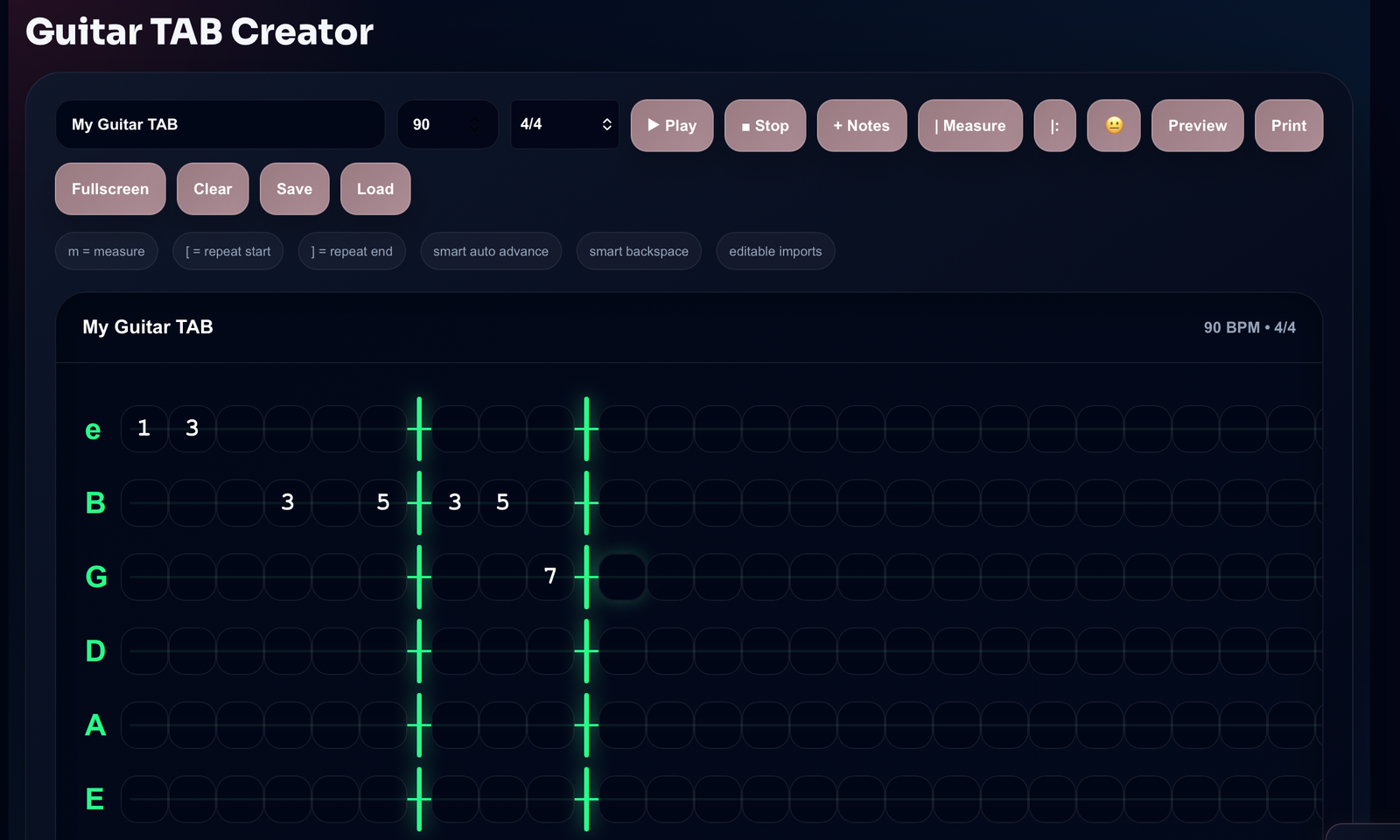
Once your goals are set, the next step is to create a structured practice schedule. Consistency is key, so try to practice at the same time each day. Divide your practice time into focused segments to cover different aspects of guitar playing.
Sample Guitar Practice Routine Schedule
- Warm-up (10 minutes): Start with finger exercises or simple scales to warm up your fingers.
- Technique (20 minutes): Focus on specific techniques such as alternate picking, finger-picking, or sweep picking.
- Theory (15 minutes): Spend time understanding music theory, chord progressions, and scales.
- Repertoire (30 minutes): Work on learning new songs or revisit older ones to ensure proficiency.
- Creativity (15 minutes): Allow time for improvisation or songwriting to foster creativity.
Adapting the Schedule to Your Level
A total beginner and a five-year player shouldn’t run the same 75-minute block. If you’re just starting out, cut each segment roughly in half and skip the theory block until basic chord changes feel automatic — five focused 15-minute sessions beat one exhausting hour that ends in frustration. Intermediate and advanced players can lengthen the technique and repertoire segments as fundamentals become second nature, and can rotate in a sixth segment for sight-reading or ear training once the core habit is solid. The schedule is a starting template, not a rulebook; adjust the minutes to match your actual skill level and energy on a given day.
3. Utilize Online Resources
Online platforms like Harniciuk Sonic’s Lessons Hub offer a wealth of resources to enhance your practice sessions. From video lessons to backing tracks, these tools can provide structure and variety to your practice routine. The trick is picking two or three resources and using them consistently rather than bouncing between a dozen apps and tabs every week — a single well-used metronome and a single lesson library will move your playing further than a rotating cast of tools you never open twice.
Benefits of Online Resources
- Access to Expert Lessons: Learn from experienced guitarists and instructors.
- Variety of Material: Explore different styles, techniques, and songs.
- Interactive Tools: Use backing tracks and metronomes to improve timing and rhythm.
Treat these tools as scaffolding rather than a crutch — the goal is always to internalize timing and technique well enough that you can play confidently without a backing track running underneath you.
4. Track Your Progress
Tracking your progress is essential to stay motivated and see how far you’ve come. Keep a practice journal or use an app to log your sessions. Note what you practiced, for how long, and any breakthroughs or challenges you faced. Over a few months this log becomes its own kind of proof — on a discouraging day, flipping back to what you couldn’t play eight weeks ago is often more convincing than anyone else’s praise.
Tracking Tips
- Record Sessions: Occasionally record your practice sessions to objectively assess your playing.
- Set Milestones: Celebrate small victories, such as mastering a difficult riff or increasing your speed.
- Reflect Regularly: Take time to reflect on what works and what doesn’t in your practice routine.
- Compare Recordings: Every month, re-record the same short passage and listen back to back with the earlier take — small improvements in tone, timing, or clarity are much easier to hear than to feel in the moment.
5. Stay Motivated
Maintaining motivation is crucial for long-term success. Set realistic expectations, and don’t be too hard on yourself if progress seems slow. Remember, every guitarist experiences plateaus, and perseverance is key to overcoming them. A plateau usually means your ear has gotten sharper faster than your fingers have caught up — you’re noticing flaws you couldn’t hear a month ago, which is progress even though it doesn’t feel like it.
Motivation Strategies
- Find a Practice Buddy: Practicing with someone else can make sessions more enjoyable and productive.
- Join a Community: Engage with other guitarists online or in person to share tips and experiences.
- Reward Yourself: Set up a reward system for achieving milestones, such as treating yourself to new strings or a guitar accessory.
- Mix In Fun Playing: Reserve five minutes at the end of every session purely for playing something you enjoy, with no goal attached — it keeps the guitar feeling like an instrument rather than homework.
By following these steps, you can create a practice routine that is not only effective but enjoyable. Remember, consistency and structure are key components of a successful guitar practice regimen. The Harniciuk Sonic workflow can further enhance your journey by providing diverse tools and resources tailored for guitarists. Start with the schedule above exactly as written for two weeks before changing anything — most routines fail not because the plan was wrong, but because it was abandoned before it had a chance to become a habit.
Common Mistakes That Stall a Practice Routine
Even a well-designed guitar practice routine can stop working if a few habits creep in unnoticed. Watch for these before they undo the routine above.
Where Practice Time Quietly Leaks
- Noodling Instead of Practicing: Picking up the guitar and playing whatever feels good is enjoyable, but it isn’t the same as working on a weak point — save noodling for the fun-playing minutes at the end of a session, not the whole block.
- Skipping the Warm-up: Jumping straight into fast repertoire with cold hands increases the odds of sloppy technique and, over time, strain — the ten-minute warm-up earns its place even on short days.
- Practicing Mistakes at Speed: Running a difficult passage at full tempo before it’s clean just cements the wrong version in muscle memory. Slow the metronome down until the passage is accurate, then increase speed in small steps.
- No Fixed Practice Time: Practicing whenever there happens to be a spare moment makes it easy to skip entirely on busy days. A fixed slot, even a short one, survives busy weeks that flexible good intentions don’t.
None of these mistakes are permanent — most guitarists cycle through all four at some point. Noticing which one keeps recurring is usually enough to fix it.
If you want a more detailed breakdown of specific tools to slot into a guitar practice routine, Best Online Guitar Practice Tools and How to Use Them covers the tuner, metronome, chord analyzer and backing tracks in more depth, and pairs well with the schedule above.